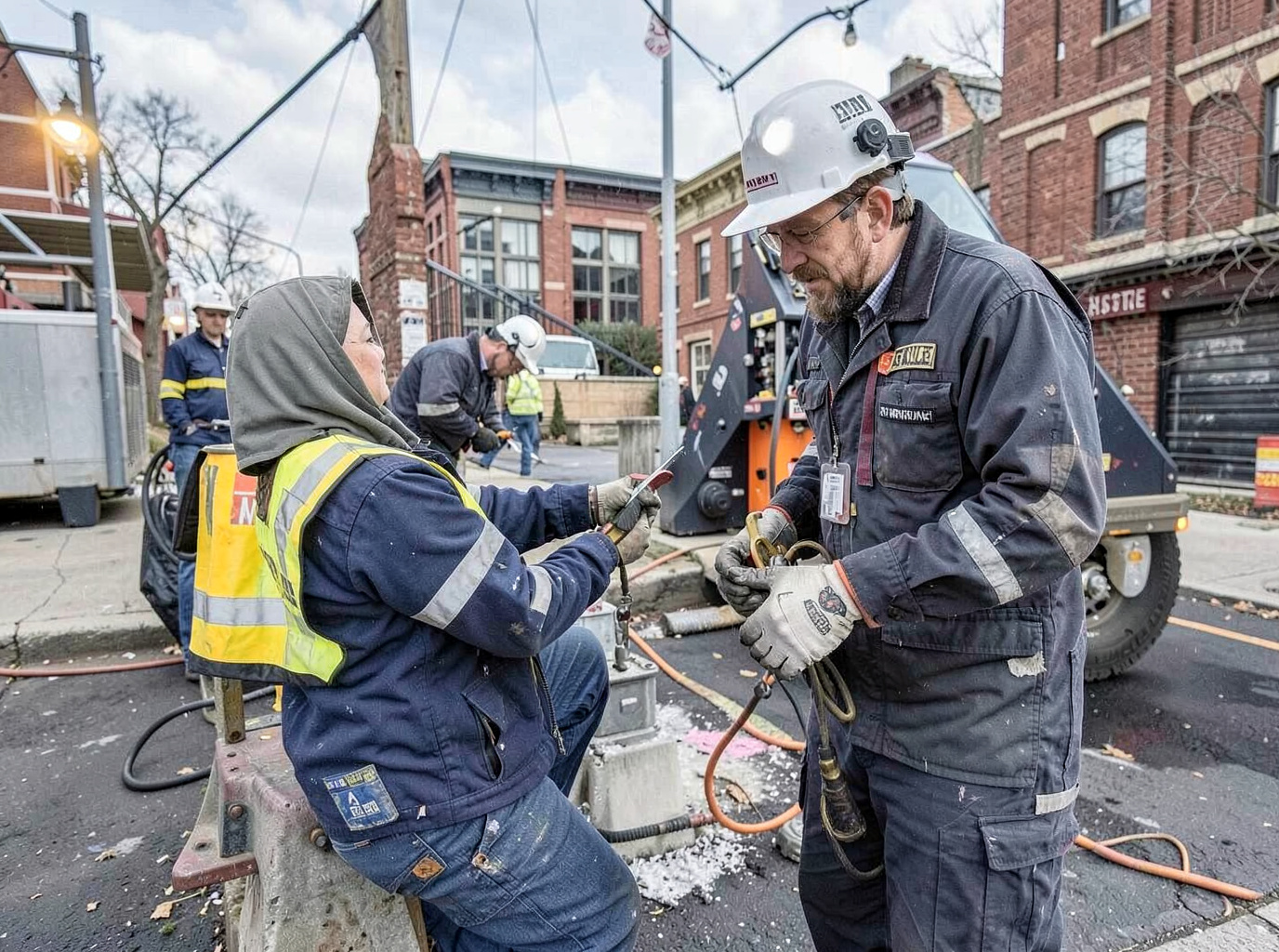
St. Louis sits in a humid continental climate where summer thunderstorms and winter freeze-thaw cycles regularly push water into older brick and frame homes. Neighborhoods such as Soulard and Lafayette Square contain many pre-1900 structures with limestone foundations and clay soils that direct runoff toward basements. When water enters through these foundations it travels along lath-and-plaster walls and under tongue-and-groove floors, creating hidden pockets that must be opened and dried before mold sets in within 48 hours.
Extraction equipment must handle both clear water and Category 3 sewage backups common after heavy rains overwhelm combined sewers in Midtown and Benton Park. Technicians use moisture meters on brick, oak flooring, and plaster to locate saturation that standard fans miss. In homes near Forest Park or the Missouri Botanical Garden, mature tree roots often crack older clay sewer lines, turning a simple leak into widespread subfloor damage that requires targeted removal rather than whole-room demolition.
Drying plans account for the city’s tight lot lines and shared walls in Shaw and Forest Park Southeast, where negative air pressure must be balanced to avoid pulling moisture into neighboring units. Dehumidifiers sized for St. Louis summer humidity levels run longer on masonry walls than on drywall, and technicians monitor daily readings until levels return to the 10-12 percent range typical for local lumber. Failure to reach these targets before winter heating begins often leads to cracking and recurring issues the following spring.
Technician insight
In St. Louis, the thing that catches most people out with Emergency Water Damage Restoration is how fast moisture moves through the limestone foundations and clay soils under Soulard and Lafayette Square homes during our frequent severe storms; once it reaches lath and plaster it hides for weeks unless you open and meter every wall.
Sewer Backup After Storm in Tower Grove South
Heavy rain overwhelmed the combined sewer on a Tower Grove South block, sending water through the floor drain into a finished basement. Extraction revealed saturation in the oak subfloor and plaster walls. Targeted drying and selective material removal stopped mold growth and restored the space without full gutting.
Emergency Water Damage Restoration Services We Offer
✓Basement Flood Extraction
Removes standing water from St. Louis basements after storms or sewer backups using submersible pumps sized for clay-soil drainage problems common in Soulard and Carondelet.
✓Structural Drying and Dehumidification
Places commercial air movers and dehumidifiers to pull moisture from brick, plaster, and hardwood in older Central West End and Lafayette Square homes before mold develops.
✓Sewage Cleanup and Disinfection
Handles Category 3 water from combined sewer overflows that affect Benton Park and Downtown properties, including removal of contaminated materials and antimicrobial application.
✓Appliance Leak Water Removal
Responds to washing machine, water heater, and refrigerator leaks that saturate subfloors in multi-story homes throughout University City and Webster Groves.
✓Emergency Board-Up and Tarping
Secures openings after roof or window failures during severe storms that hit areas near Busch Stadium and the Gateway Arch, preventing additional wind-driven rain.
✓Moisture Mapping and Monitoring
Uses thermal imaging and pin meters to track hidden water in walls and floors of Shaw and Tower Grove South homes, with daily readings until dry standards are met.
Emergency Water Damage Restoration Cost in St. Louis, MO
| Service | Typical Range | What Affects It |
|---|---|---|
| Initial Assessment | Free | Includes moisture mapping at the property |
| Water Extraction | $250–$900 | Depends on volume and whether sewage is involved |
| Drying Equipment Rental | $150–$450 per day | Number of days varies with wall and floor saturation |
| Sewage Disinfection Add-On | $300–$700 | Required for Category 3 water in older combined-sewer neighborhoods |
Ranges are typical for St. Louis, MO and confirmed with an exact written quote before any work starts.
How it works
- 1
Arrival And Safety Assessment
Technicians arrive from the 63132 location, shut off water sources, and evaluate electrical hazards before entering properties in neighborhoods like The Hill or Delmar Loop.
- 2
Water Extraction
Standing water is removed with pumps and wands, focusing on basements where clay soils and old foundations trap water in Soulard and Benton Park homes.
- 3
Drying And Monitoring
Equipment is positioned and moisture levels are tracked daily until readings match the dry standards for local brick and wood construction.
- 4
Final Inspection And Handover
All affected materials are checked, equipment is removed, and the homeowner receives a written drying log before the job is considered complete.
Pricing
Upfront quotes based on water category, volume, and access; ranges reflect typical St. Louis residential jobs.