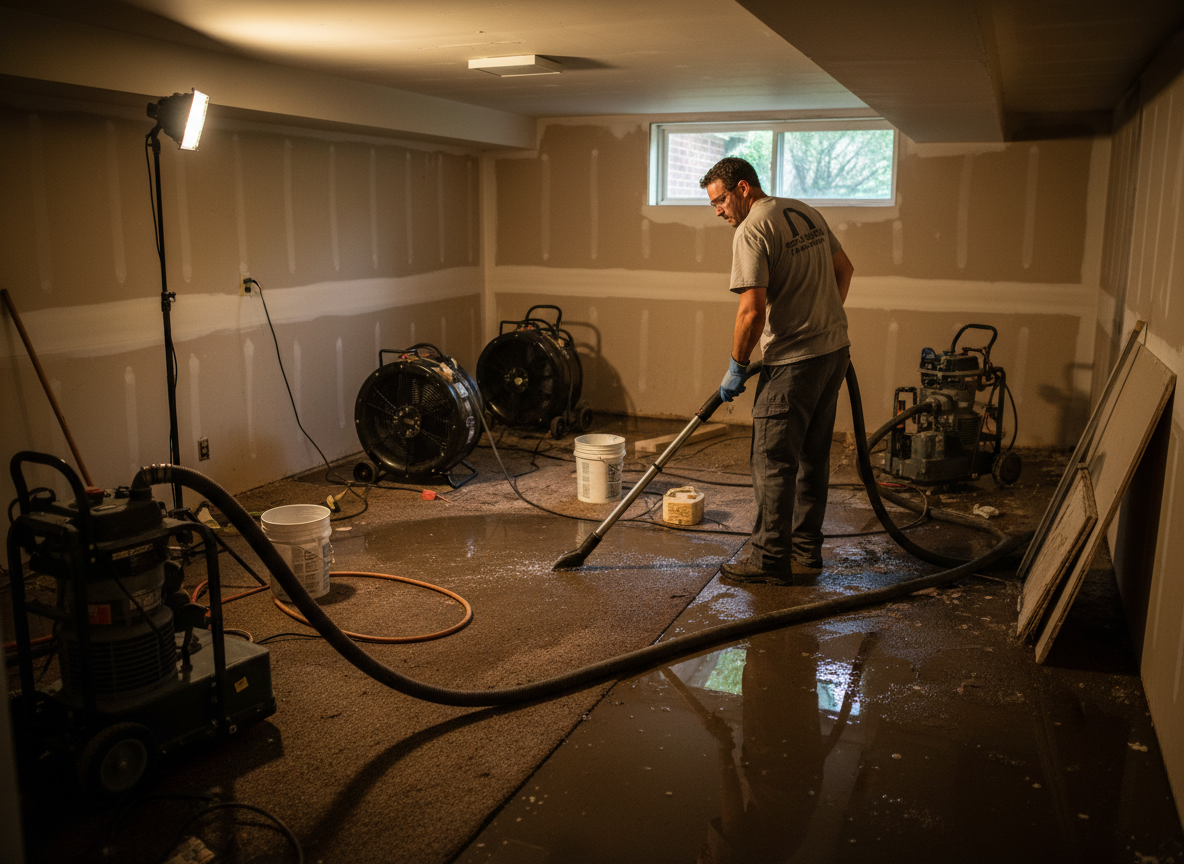
St. Louis homes built before 1940 in neighborhoods like Soulard, Lafayette Square, and Benton Park often feature brick foundations and plaster walls that trap moisture after leaks or storms. Severe thunderstorms common in the humid continental climate can send water through aging downspouts and into basements faster than newer construction handles. Technicians must pull baseboards early to check for hidden saturation behind lath and plaster, because surface drying alone lets mold return within weeks when humidity spikes in summer.
Tower Grove South and Shaw properties sit on clay-heavy soil that holds water against foundations during spring thaws and heavy rains. This creates recurring seepage along mortar joints that newer slab homes in nearby Kirkwood rarely see. Restoration crews use moisture meters on multiple wall layers and run commercial dehumidifiers for days longer than suburban jobs because the thick brick and limited airflow in these row houses slow evaporation. Skipping thermal imaging often misses pockets near the Cathedral Basilica area where utility lines run close to exterior walls.
Downtown and Midtown high-rises plus single-family homes in Carondelet face different risks from burst pipes during cold snaps. Water travels quickly through multi-story chases, soaking ceilings two floors below the source. Restoration here requires floor-by-floor documentation and containment to avoid spreading particulates into shared HVAC systems common in these buildings.
Technician insight
In St. Louis the thing that catches most people out with water damage restoration is how fast moisture travels through the lime mortar in 100-year-old brick foundations once a downspout clogs during a summer storm. Homeowners in Benton Park or The Hill often stop at fans in the basement and miss the water that has wicked up two feet into the plaster on the first floor.
Hidden moisture behind plaster in Soulard row house
A burst pipe during a cold snap sent water down an interior wall in a Soulard home. Meters showed saturation two feet up the plaster even though only the baseboard looked wet. Crews opened the wall, extracted water, and ran drying equipment for five days until readings stabilized across all layers.
Water Damage Restoration Services We Offer
✓Emergency Water Extraction
Rapid removal of standing water from basements and first floors in Soulard and Central West End brick homes before it migrates into plaster walls.
✓Structural Drying and Dehumidification
Targeted drying of joists, subfloors, and masonry in older St. Louis properties using commercial equipment sized for limited airflow in row houses.
✓Basement Seepage Repair
Address clay-soil pressure against foundations in Tower Grove South and Shaw after heavy rains common to the region.
✓Ceiling and Wall Water Damage Repair
Cut and replace saturated plaster and lath in homes near Forest Park and The Hill while preserving original trim details.
✓Storm Damage Water Removal
Clear water and debris from severe thunderstorms that hit Delmar Loop and University City properties each spring and summer.
✓Sewage Cleanup and Restoration
Safe extraction and disinfection after backups in older sewer lines serving Lafayette Square and Benton Park homes.
Water Damage Restoration Cost in St. Louis, MO
| Service | Typical Range | What Affects It |
|---|---|---|
| Water Extraction | $250–$650 | Varies with depth and access in basements of pre-war homes |
| Full Structural Drying | $400–$900 | Longer runs needed in brick row houses with poor airflow |
| Mold-Impacted Areas Add-On | $300–$700 | When moisture sits behind walls in Soulard or Shaw properties |
| Ceiling Or Wall Repairs | $150–$500 | Depends on plaster versus drywall and trim matching |
Ranges are typical for St. Louis, MO and confirmed with an exact written quote before any work starts.
How it works
- 1
On-Site Assessment
Technicians arrive from the Kahlmeyer Drive location and document moisture levels in affected rooms using meters and thermal imaging.
- 2
Water Extraction
Remove standing water and saturated materials before moisture spreads through brick and plaster common in St. Louis neighborhoods.
- 3
Drying And Monitoring
Set up equipment and return daily to track humidity until readings meet restoration standards for the structure.
- 4
Repairs And Restoration
Replace damaged drywall, flooring, and trim while coordinating with any needed plumbing fixes in older homes.
Pricing
Pricing depends on water volume, affected square footage, and whether hidden damage exists behind plaster in older homes.