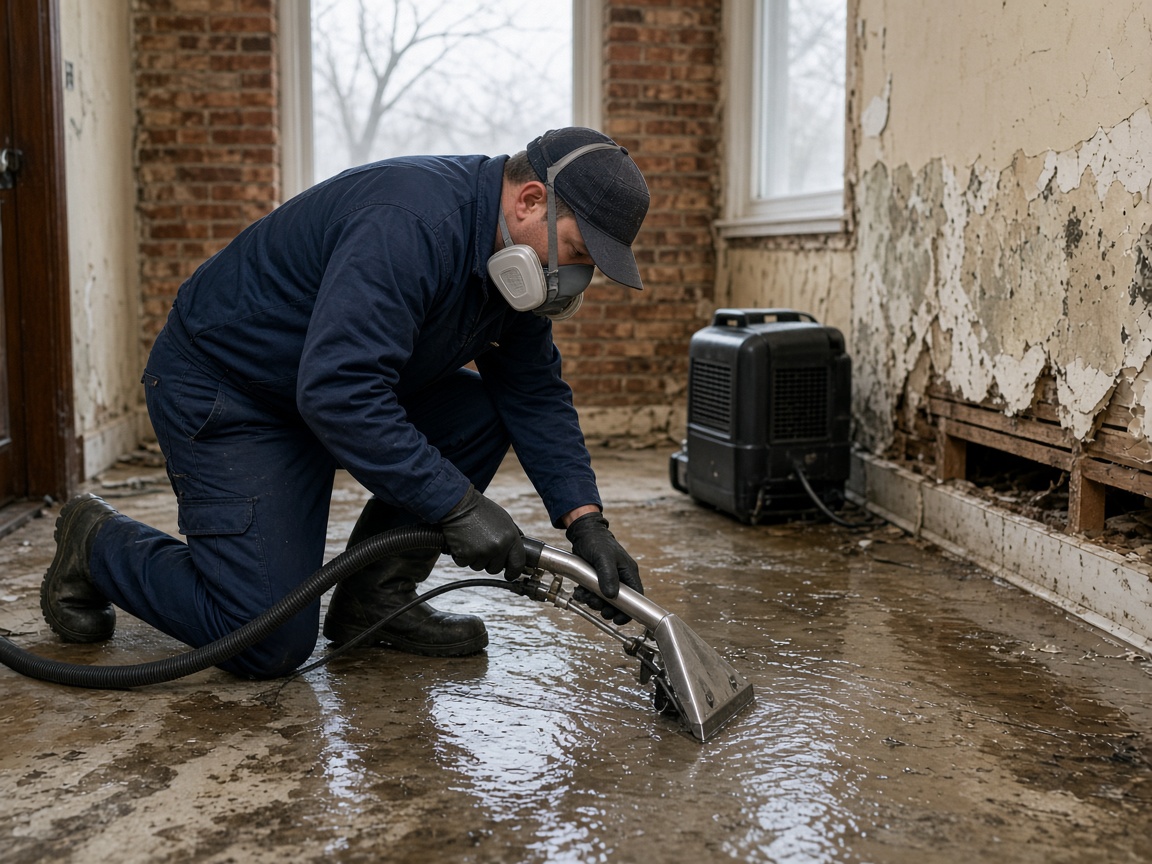
St. Louis older row houses in neighborhoods like Soulard and Lafayette Square often feature brick foundations and plaster walls that trap moisture after severe storms common in the humid continental climate. Water from heavy summer rains or winter freezes can seep into basements and crawl spaces, requiring extraction equipment that reaches behind lath and plaster without unnecessary demolition. Crews must account for the Independent City terrain where runoff from nearby hills concentrates in low-lying blocks near the Mississippi.
In areas such as The Hill and Benton Park, many homes built before 1940 have narrow lot lines that limit equipment access and force smaller drying units. After storms pass through Forest Park Southeast or Shaw, hidden pockets of water behind built-in cabinetry or under hardwood floors can lead to long-term issues if not addressed with proper airflow and moisture monitoring. Technicians check for saturation in lathe-and-plaster systems that differ from modern drywall assemblies found in newer construction near Clayton and Kirkwood.
Cleanup work frequently involves properties near the Gateway Arch and Downtown where commercial buildings share walls with residential units, raising the risk of water migrating between structures. Crews use targeted dehumidification to prevent secondary damage in multi-unit buildings common in Midtown and Carondelet. Seasonal cold snaps followed by thaws create repeated freeze-thaw cycles that crack mortar joints and allow groundwater entry in basements throughout University City and Webster Groves.
Technician insight
In St. Louis the thing that catches most people out with Water Damage Cleanup is how quickly water travels through the lime mortar in 100-year-old brick foundations during a summer thunderstorm, especially in blocks like Soulard and Benton Park where the grade slopes toward the house.
Water Intrusion in a Soulard Row House
Heavy rain entered through a cracked foundation wall during a July storm. Inspection showed saturation in the plaster behind built-in shelving and under the dining room floor. Extraction and targeted drying prevented mold growth in the narrow basement typical of the neighborhood. The home returned to normal use within five days.
Water Damage Cleanup Services We Offer
✓Basement Water Extraction
Removes standing water from St. Louis basements after heavy rains, using pumps sized for older brick foundations common in Soulard and Benton Park.
✓Structural Drying Services
Deploys air movers and dehumidifiers to dry plaster walls and hardwood floors in row houses across Lafayette Square and Shaw.
✓Carpet and Pad Removal
Extracts saturated carpet and padding while protecting original hardwood in homes near the Missouri Botanical Garden and Tower Grove South.
✓Crawl Space Drying
Addresses trapped moisture under older homes in The Hill and Forest Park Southeast where limited access requires compact equipment.
✓Storm Damage Cleanup
Handles water intrusion from severe thunderstorms that hit Delmar Loop and Central West End properties during peak summer months.
Water Damage Cleanup Cost in St. Louis, MO
| Service | Typical Range | What Affects It |
|---|---|---|
| Single-room extraction and drying | $450–$950 | Higher when plaster walls or hardwood require extended drying time |
| Basement cleanup after storm | $800–$1,800 | Varies with depth of water and debris from nearby streets |
| Crawl space drying | $600–$1,200 | Affected by limited access in narrow-lot homes |
| Multi-room drying package | $1,200–$2,500 | Common when water migrates through shared walls in row houses |
Ranges are typical for St. Louis, MO and confirmed with an exact written quote before any work starts.
How it works
- 1
On-Site Assessment
Technicians inspect affected areas in the specific neighborhood to identify water migration paths through brick or frame construction.
- 2
Water Removal
Extraction equipment pulls standing water while protecting original finishes typical in St. Louis homes built before 1940.
- 3
Drying And Monitoring
Airflow and moisture readings continue until levels stabilize, accounting for humidity swings after local storms.
- 4
Final Verification
Return visit confirms dryness before any reconstruction begins in the affected rooms.
Pricing
Costs depend on water volume, affected square footage, and access in older St. Louis housing stock; upfront quotes provided after inspection.