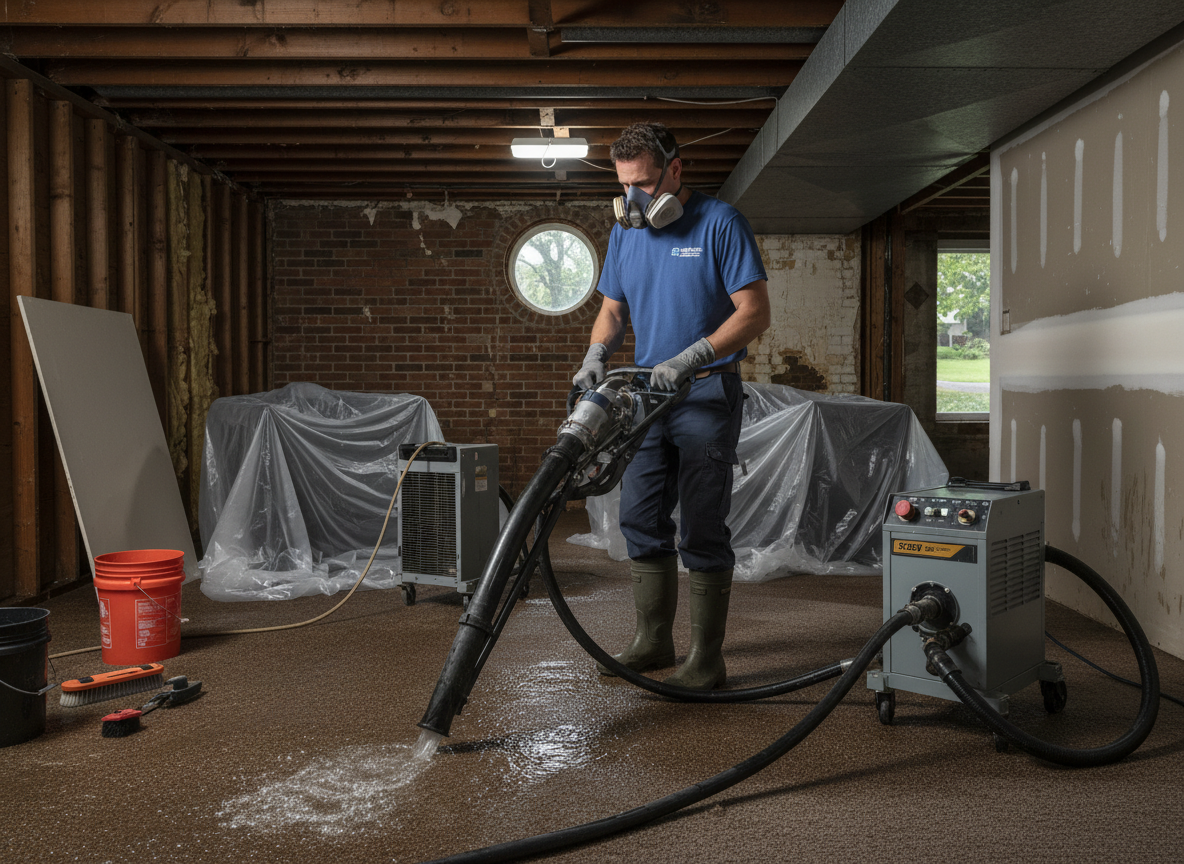
St. Louis sits in a humid continental climate where severe thunderstorms roll through in spring and summer, dumping heavy rain that overwhelms older brick and frame homes in neighborhoods like Soulard, Lafayette Square, and The Hill. These pre-1940 structures often have plaster walls over lath and limestone foundations that trap moisture, so extraction alone rarely solves the problem. We use moisture meters and thermal imaging to locate hidden water behind walls and under floors before mold sets in.
Basements in Benton Park, Shaw, and Forest Park Southeast sit close to the water table, and combined sewer systems in the independent city can back up during intense storms. When that happens, Category 3 water requires full containment, HEPA air scrubbing, and antimicrobial treatment to meet local health standards. We coordinate with St. Louis city inspectors when structural repairs affect load-bearing masonry.
Nearby Clayton and University City homes built on clay soils experience different movement patterns than the flat downtown blocks, which changes how we set drying equipment and monitor for recurring seepage. Winter freezes followed by thaws crack pipes in attics and crawl spaces, sending water into finished spaces above. Our crews work from our Kahlmeyer Drive location to reach these jobs within hours during peak storm seasons.
Technician insight
In St. Louis the thing that catches most people out with water damage is how quickly moisture travels up brick party walls in Soulard and Lafayette Square row houses; you can extract the basement floor but miss the shared wall that later grows mold into the neighbor's unit.
Storm Backup in Tower Grove South
Heavy rain overwhelmed the combined sewer and pushed water into a finished basement. We found standing water plus hidden saturation behind plaster on two walls. Extraction and targeted drying prevented mold spread into the first floor, and the homeowner returned to a dry, usable space within a week.
Water Damage Restoration Service Services We Offer
✓Emergency Water Extraction
Rapid removal of standing water from basements and first floors in neighborhoods like Soulard and Downtown after storms or pipe bursts.
✓Structural Drying and Dehumidification
Industrial drying of plaster, hardwood, and masonry in older St. Louis homes to prevent secondary damage and mold growth.
✓Sewage Cleanup and Sanitation
Safe removal and disinfection of contaminated water from combined sewer backups common in Central West End and Tower Grove South.
✓Basement Water Damage Repair
Restoration of flooded lower levels in brick homes across Lafayette Square, Benton Park, and Carondelet, including flooring and wall replacement.
✓Contents and Document Drying
Specialized drying of furniture, rugs, and important papers for homes near Forest Park and the Missouri Botanical Garden.
Water Damage Restoration Service Cost in St. Louis, MO
| Service | Typical Range | What Affects It |
|---|---|---|
| Emergency Extraction | $600–$2,200 | Varies by water volume and access in multi-story homes |
| Full Structural Drying | $800–$3,000 | Longer run times needed for plaster and limestone foundations |
| Sewage Remediation | $1,500–$4,500 | Includes containment and disposal for Category 3 water |
| Contents Drying | $300–$1,200 | Depends on quantity of rugs, documents, and furniture |
Ranges are typical for St. Louis, MO and confirmed with an exact written quote before any work starts.
How it works
- 1
On-Site Assessment
We arrive at your St. Louis property, map moisture with meters, and identify affected materials in plaster walls or hardwood floors.
- 2
Water Removal
Pumps and extraction equipment pull standing water from basements and crawl spaces while containing any sewage.
- 3
Drying And Monitoring
Air movers and dehumidifiers run until moisture readings return to normal, with daily checks on hidden areas behind brick.
- 4
Restoration And Repairs
We replace damaged drywall, flooring, and trim, coordinating with city requirements for older homes in Shaw or The Hill.
Pricing
Costs depend on water category, affected square footage, and whether hidden moisture exists in older masonry.