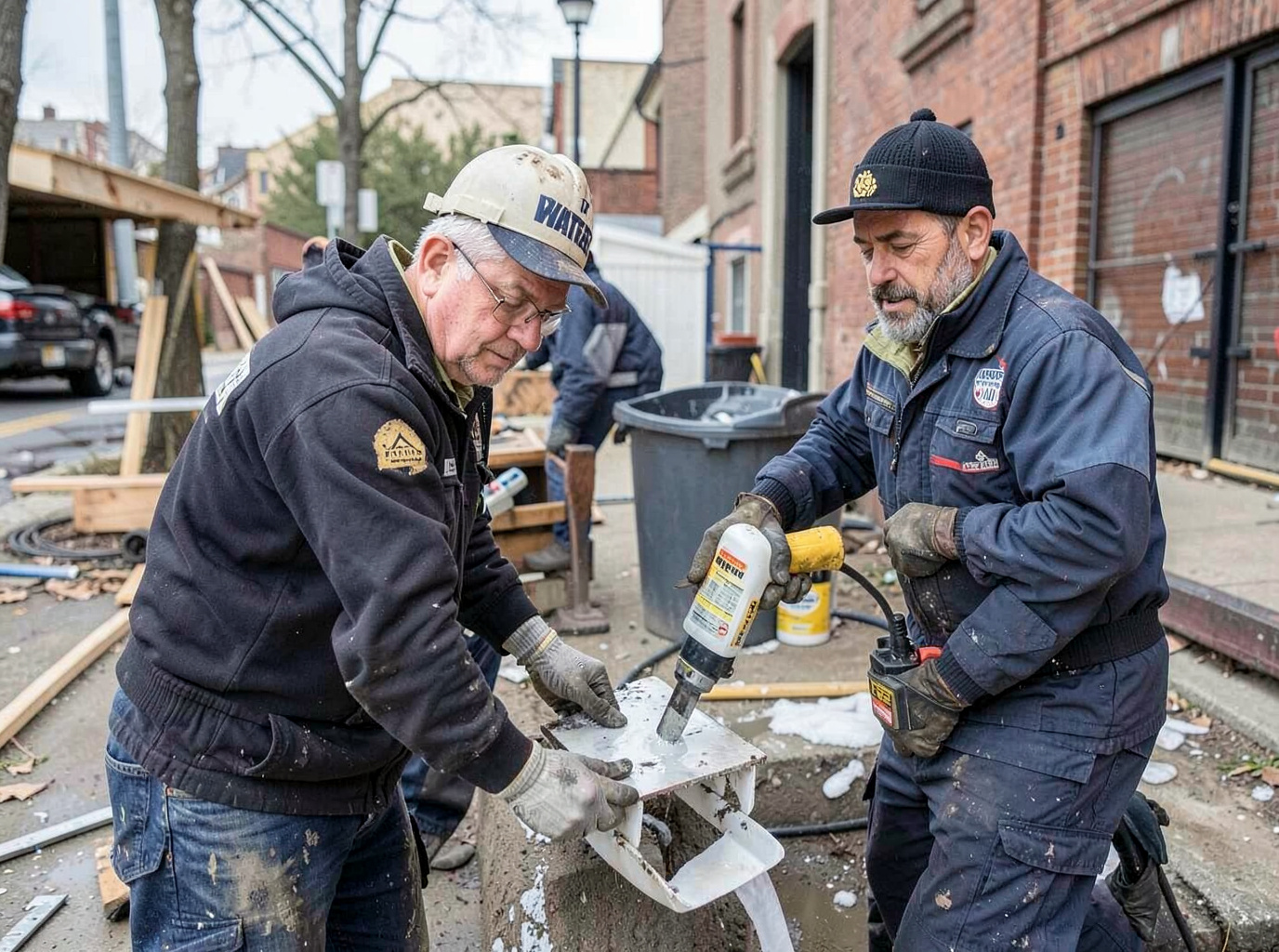
St. Louis sits in an independent city with a humid continental climate that brings sudden downpours in summer and hard freezes in winter. These swings hit older brick and frame homes hardest, especially in Central West End and The Hill where many properties still rely on original clay sewer lines and uninsulated basements. Water finds paths through mortar joints and around window wells that newer construction avoids, so repair work often requires removing baseboards and checking behind plaster rather than stopping at visible stains.
Frequent severe storms push water through flat roofs common on Soulard and Benton Park row houses. Once moisture reaches lath and plaster, it travels laterally along floor joists into adjacent units, creating hidden pockets that standard drying fans miss. Repair crews must open ceilings in multiple rooms and use moisture meters on masonry walls to confirm the full extent before any reconstruction begins.
Terrain around Forest Park Southeast and Shaw slopes toward combined sewers that back up during heavy rain. This forces water up through floor drains and sump pits in older homes. Repair jobs here routinely include replacing rotted subfloors and treating joists for mold while coordinating with city inspectors on any work that touches the sewer lateral.
Nearby cities such as Clayton and University City share similar housing stock, but St. Louis proper sees more properties with balloon framing that lets water travel vertically between floors. Technicians learn to check second-story ceilings when ground-level leaks appear because capillary action in the cavities moves moisture upward faster than in modern platform framing.
Technician insight
In St. Louis the thing that catches most people out with water damage repair is how quickly moisture travels up balloon-framed walls in Central West End and Shaw homes once a sewer backs up or a freeze hits. The old clay lines and uninsulated basements common here mean you often have to open more wall than the water stain suggests or the job will come back after the next storm.
Tower Grove South Row House After Summer Storm
Water entered through a parapet wall during a July thunderstorm and soaked second-floor plaster. Inspection showed moisture had traveled down balloon studs into the first-floor ceiling. Crews opened the affected sections, extracted water, dried the cavities, and replaced damaged material while preserving the original tin ceiling detail.
Water Damage Repair Services We Offer
✓Basement Water Extraction
Removes standing water from older St. Louis basements after storms and restores affected masonry walls before mold sets in.
✓Ceiling Leak Repair
Locates roof or pipe leaks common in Central West End and Soulard row houses then replaces damaged plaster and lath.
✓Floor Joist Drying and Treatment
Dries and treats structural wood in homes with balloon framing found throughout Lafayette Square and Benton Park.
✓Sewer Backup Cleanup
Handles combined sewer overflows that push water into Shaw and Tower Grove South basements during heavy rain events.
✓Freeze Damage Restoration
Repairs burst pipes and resulting water damage inside uninsulated homes in The Hill and Carondelet after winter cold snaps.
✓Hidden Moisture Mapping
Uses meters and infrared scans to trace water migration behind brick and plaster in Midtown and Downtown properties.
Water Damage Repair Cost in St. Louis, MO
| Service | Typical Range | What Affects It |
|---|---|---|
| Initial Assessment | $150–$350 | Varies by size of home and number of affected levels |
| Basement Extraction | $800–$2,200 | Depends on water depth and whether sewer backup is involved |
| Ceiling And Wall Drying | $600–$1,800 | Higher in multi-story brick homes with plaster |
| Floor Joist Treatment | $400–$1,100 | Increases when balloon framing requires multiple access points |
Ranges are typical for St. Louis, MO and confirmed with an exact written quote before any work starts.
How it works
- 1
On-Site Assessment
Technician inspects the affected areas of your St. Louis property, checks moisture levels in walls and floors, and notes any impact on original brick or plaster.
- 2
Water Removal
Extracts standing water and sets drying equipment suited to the home's construction type and the season's humidity.
- 3
Source Repair
Fixes the leak or drainage issue, whether a roof penetration common in Soulard or a sewer backup in lower-lying blocks.
- 4
Drying Verification And Reconstruction
Confirms dryness with meters, removes damaged materials, and restores finishes while meeting city requirements for older structures.
Pricing
Upfront quotes provided after inspection at your property.