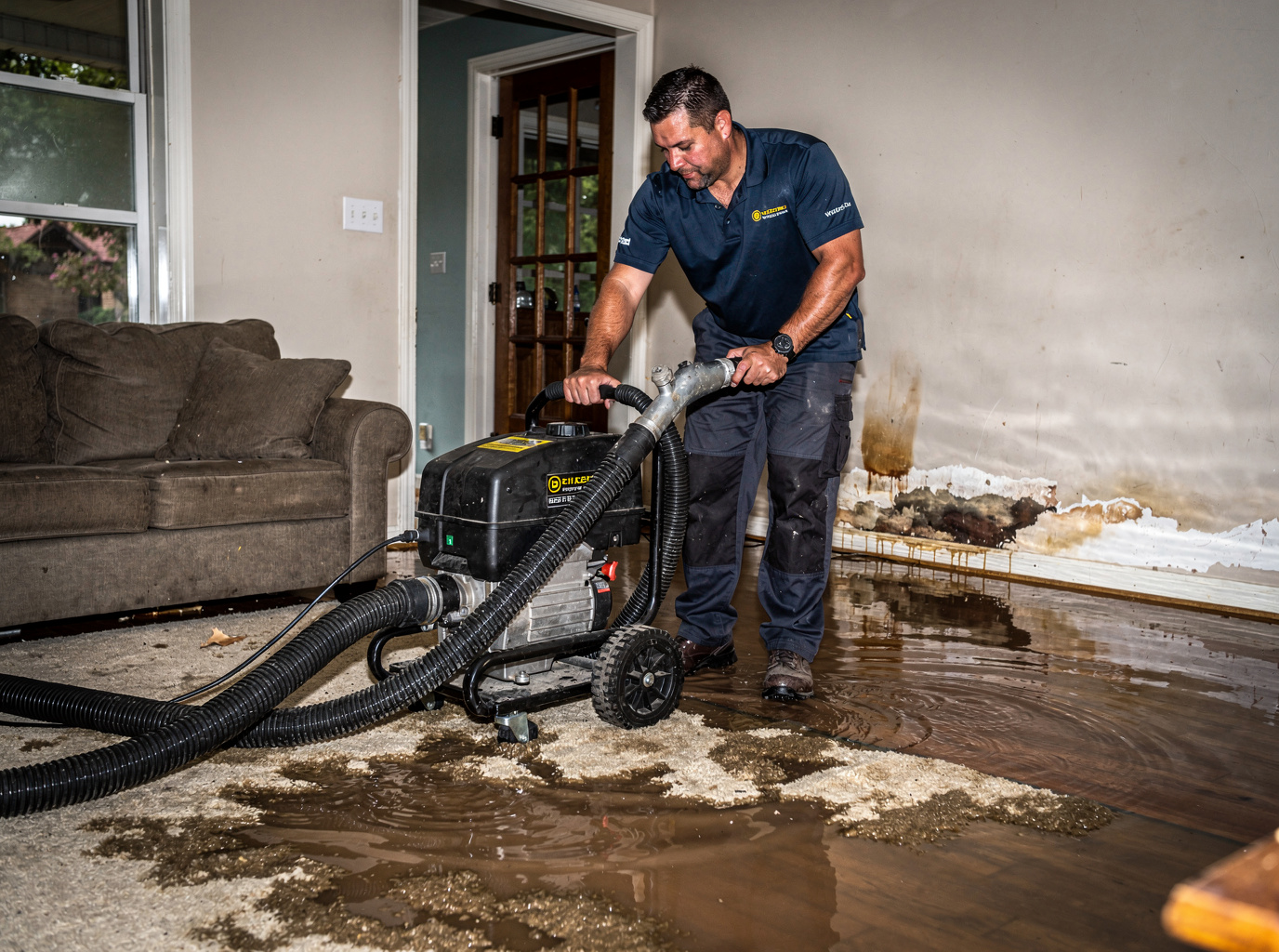
Serving O'Fallon from our base at 10550 Kahlmeyer Dr, we reach properties along North Broadway and Adelaide Avenue within minutes after severe storms hit. The neighborhood's older brick homes with full basements sit on lots that drain slowly toward O'Fallon Park, so standing water after a summer downpour often reaches foundation walls before crews arrive. We extract, dry, and prevent mold in these tight-access basements where slab-on-grade additions from the 1920s meet original stone foundations.
Winter freezes followed by rapid thaws create ice dams on the pitched roofs common here, sending meltwater behind gutters and into second-floor ceilings. Our team works Mon–Fri 8am–6pm and Sat 9am–2pm to open walls, remove wet plaster, and set drying equipment before the next cold front arrives. We know which alleys stay clear for equipment trucks and which blocks near the park flood first when the Mississippi backs up.
Nearby University City and Clayton customers sometimes call when their storm hits harder, but O'Fallon jobs stay local because we already carry the right pumps for the clay-heavy soil that holds moisture longer than the sandy lots farther west.
Around 17. O'Fallon
We regularly work near:
- 📍O'Fallon Park
- 📍Adelaide Avenue
- 📍North Broadway
- 📍O'Fallon Street
- 📍Penrose Park
Water Damage Restoration in 17. O'Fallon — Local Notes
- •Many O'Fallon blocks have narrow driveways and rear alleys that limit large equipment access, so we stage drying fans through side doors on Adelaide Avenue homes.
- •Brick row houses from the early 1900s often share foundation walls, meaning water from one property can migrate into the neighbor's basement on North Broadway.
- •Low spots along the O'Fallon Park edge collect runoff from the slight slope down from Florissant Avenue, requiring extra perimeter drainage before carpet and hardwood removal.
- •Frequent severe storms drop heavy rain on the clay soils here, so we pre-position extraction gear during watches rather than waiting for 911 calls.