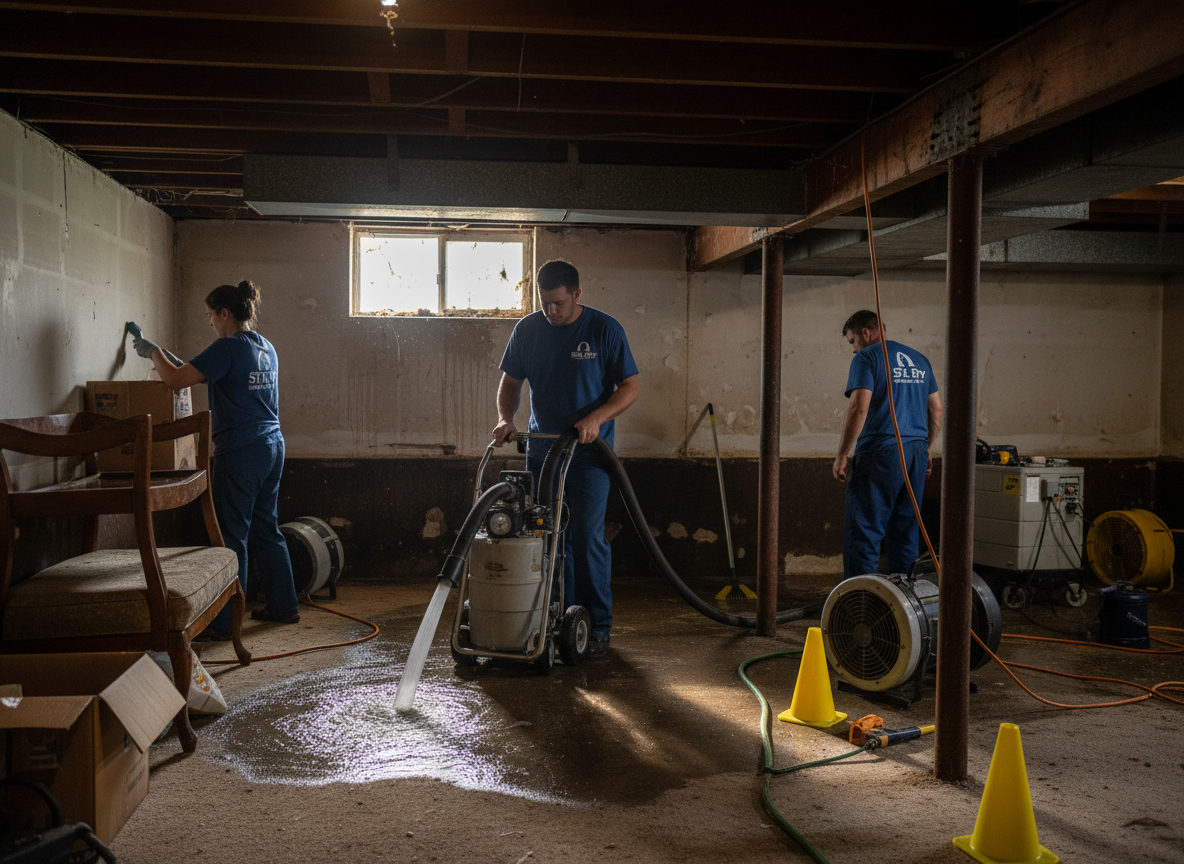
St. Charles homes built before 1950 along Main Street and the riverfront often feature brick foundations and narrow lots that trap water after heavy rains. Crews from St. Louis Water Damage Restoration pros reach these addresses quickly via I-70 or the Katy Trail access points, extracting water before it reaches finished basements common in the historic district.
Summer thunderstorms and spring Missouri River rises hit St. Charles harder than inland neighborhoods because of the flat river plain and aging storm drains. Technicians familiar with the area use moisture meters on lath-and-plaster walls and focus drying on the tight crawl spaces typical of 19th-century houses between Blanchette Park and the county courthouse.
Winter freezes followed by thaws crack older clay pipes under streets like Second and Third, sending water into nearby basements. The team at 10550 Kahlmeyer Dr dispatches trucks Monday through Friday 8am–6pm and Saturday 9am–2pm to handle these seasonal calls in St. Charles before secondary mold sets in.
Around 18. St. Charles
We regularly work near:
- 📍Frontier Park
- 📍Main Street Historic District
- 📍Blanchette Park
- 📍St. Charles County Courthouse
- 📍Missouri Riverfront
Water Damage Restoration in 18. St. Charles — Local Notes
- •Historic brick row homes on narrow Main Street lots limit equipment placement, requiring smaller portable extractors and careful protection of original wood floors.
- •Proximity to the Missouri River means groundwater can re-enter foundations days after the initial storm, so crews install perimeter barriers on riverfront properties.
- •Aging combined sewers in the downtown core back up during heavy rain, pushing contaminated water into lower levels of buildings near the St. Charles County Courthouse.
- •Winter access on steep driveways off Fifth Street demands four-wheel-drive trucks and heated hoses to prevent line freeze during extraction.