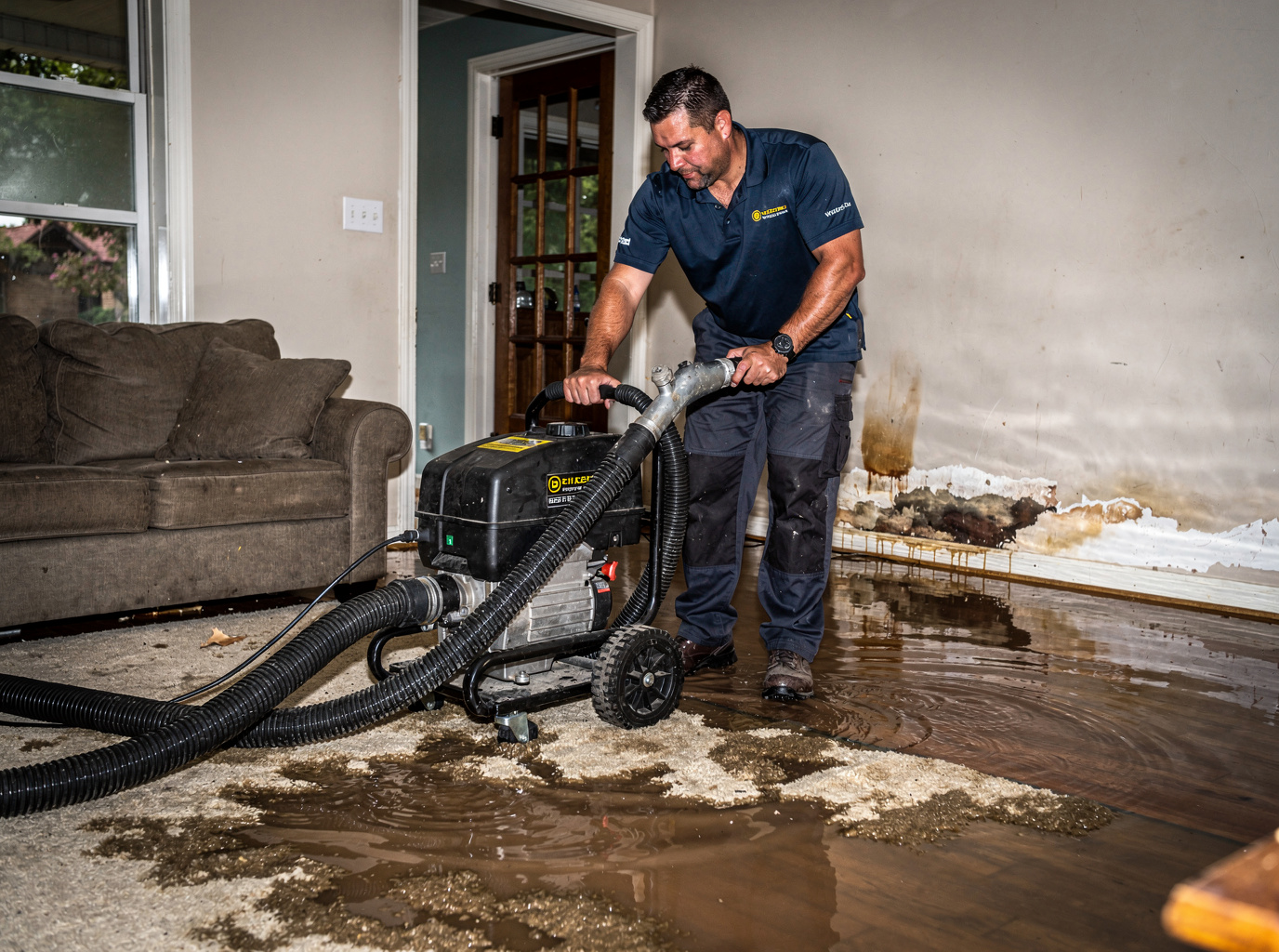
Crestwood homes built mostly in the 1950s and 1960s sit on clay soils that hold water after the severe thunderstorms common in St. Louis summers and the freeze-thaw cycles of winter. When a pipe bursts or runoff enters a finished basement along Watson Road or near the slight slopes by Crestwood Park, extraction and drying must start the same day to keep mold from taking hold in the brick foundations typical here.
Our crew leaves the 10550 Kahlmeyer Dr shop and reaches Crestwood addresses inside 30 minutes during business hours. We bring truck-mounted pumps and industrial dehumidifiers sized for the smaller lots and attached garages found throughout the neighborhood, then coordinate with local plumbers when slab leaks appear under the older concrete floors.
Residents in Crestwood also call us after heavy rains push water through window wells on the south side of homes facing the Shoppes at Crestwood. We document every step for insurance adjusters and return the following day to check moisture readings before any reconstruction begins.
Around 29. Crestwood
We regularly work near:
- 📍Crestwood Park
- 📍The Shoppes at Crestwood
- 📍Crestwood Elementary School
- 📍Watson Road
- 📍Grant's Trail
Water Damage Restoration in 29. Crestwood — Local Notes
- •Crestwood's post-war brick homes sit on clay soil that slows drainage, so we often need subfloor drying systems after basement floods.
- •Properties near Watson Road and Crestwood Park experience runoff from the gentle hills, requiring extra perimeter pumps during spring storms.
- •Many Crestwood basements were finished in the 1970s with paneling that hides leaks until damage reaches the joists.
- •Narrow driveways common on side streets like Sappington Road limit equipment size, so we stage most drying gear inside the garage.